

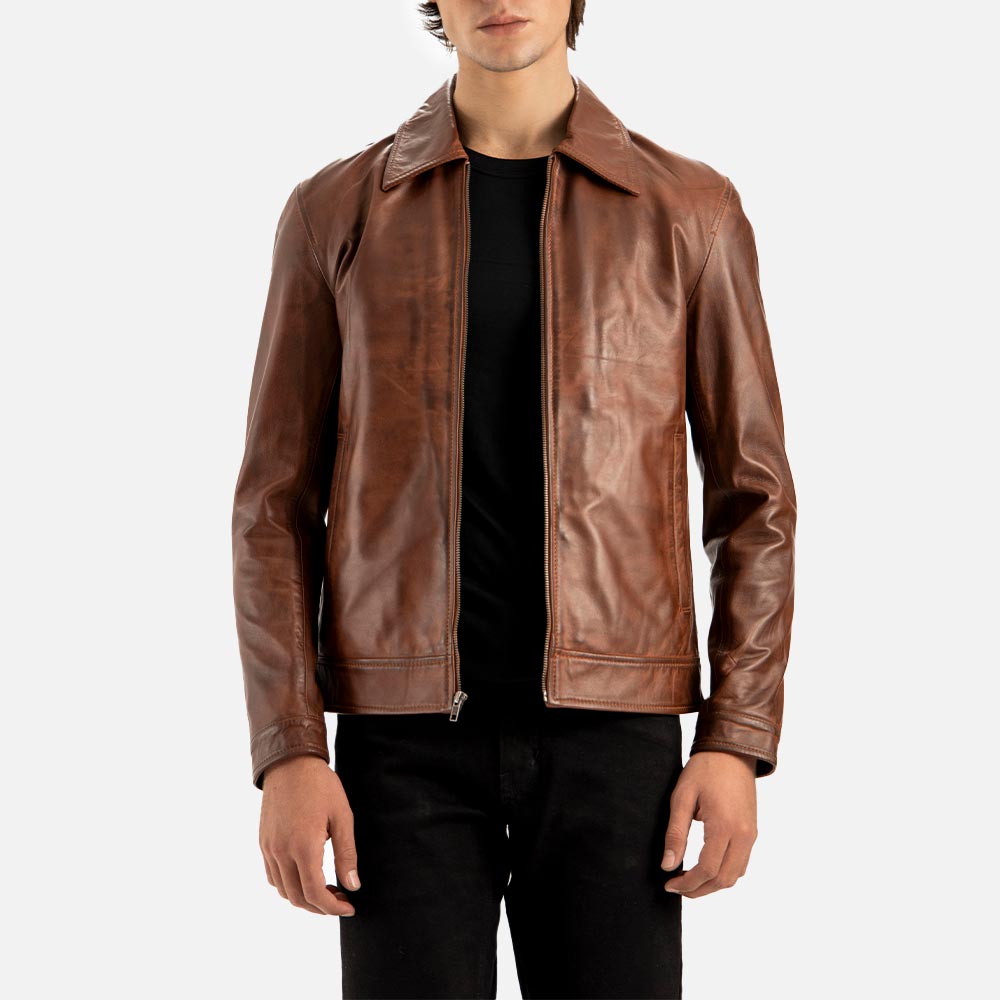
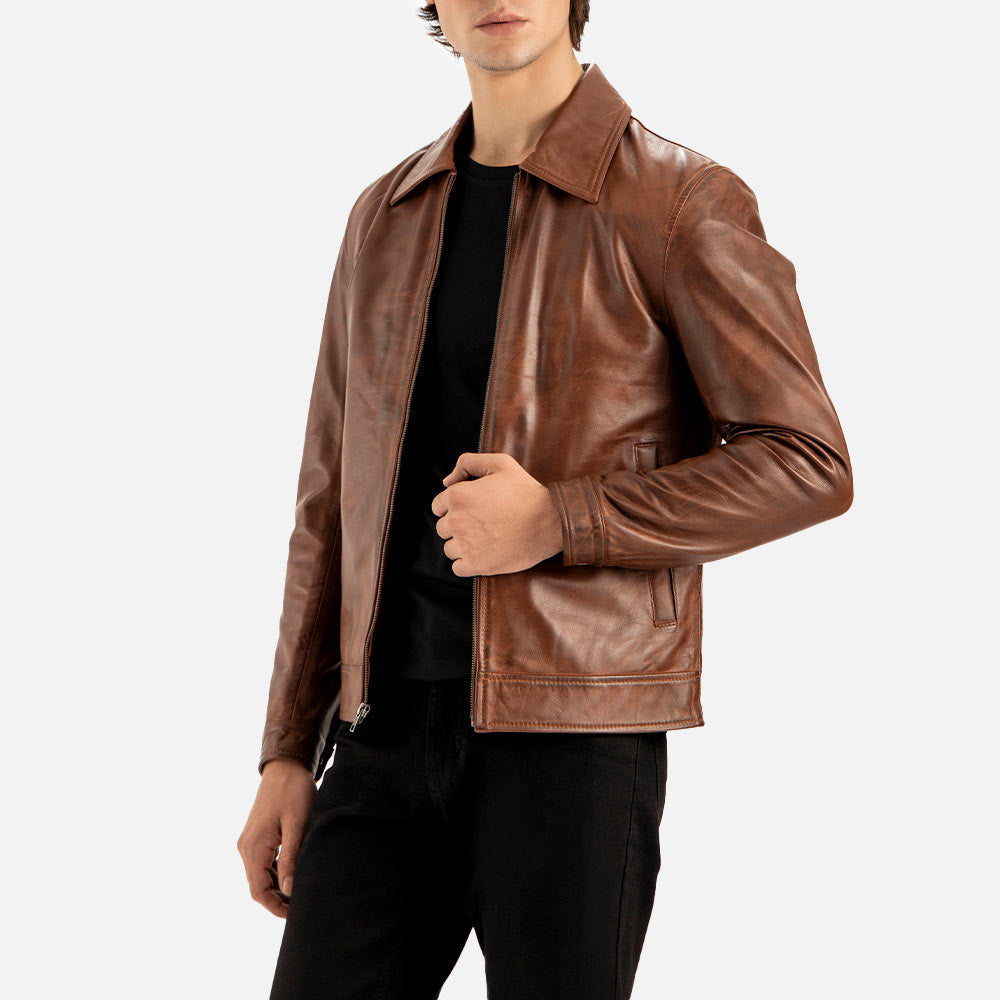
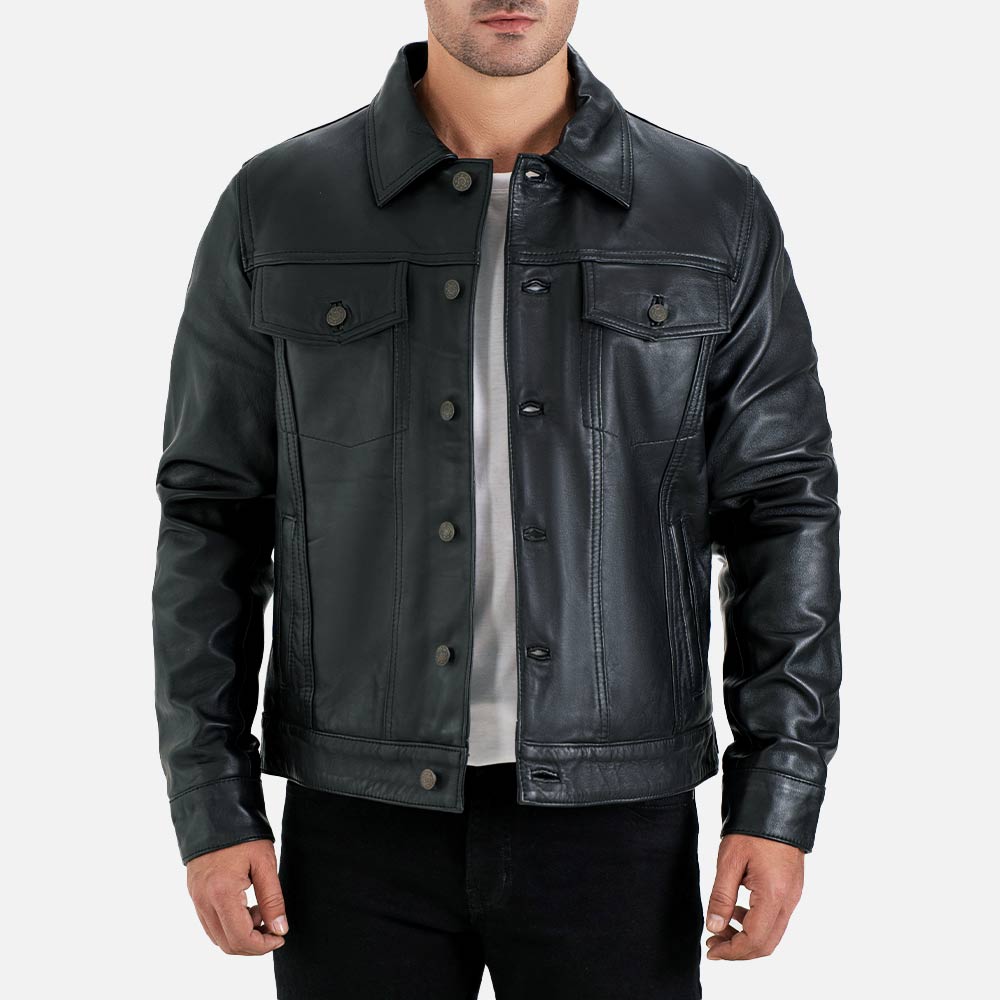
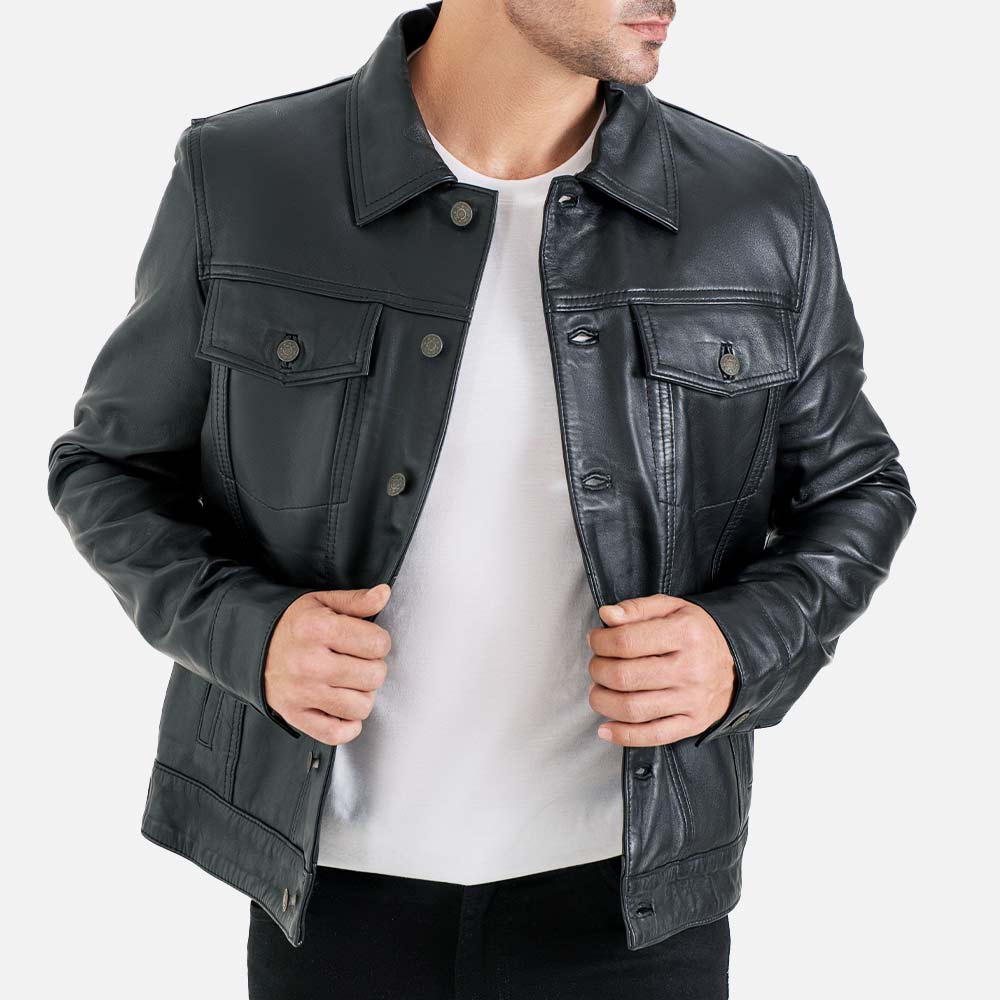
Picture this: you're at a store, and you see two leather jackets. One costs $60, the other $300, and they almost look the same. You touch the fabric and the hardware, trying to distinguish which to buy. But even more confused than before, you move on without a decision.
This guide clears up the confusion, explains what you're actually paying for, from the type of leather to the history, so you can tell a good jacket from a fake imitation.
Quick answer:
A leather jacket is a jacket made from tanned animal hide, most often cowhide, lambskin, or sheepskin. These jackets are very durable, wind resistant, and last you for years if they are properly taken care of. They range from the biker and café racer to the bomber and shearling aviator. A well made full grain leather jacket for men lasts 10 to 20 years with regular conditioning.
What Counts as a Real Leather Jacket
The honest starting point is this: a leather jacket is only as good as the hide it's cut from.
A leather jacket is an outer layer made from tanned animal hide and closed with a zip or buttons. That plain definition, though, hides an enormous quality range. Genuine full-grain leather is tough, breathable, naturally wind resistant, and it improves with age, softening and darkening into a patina unique to the person wearing it. "Leather look," bonded, and PU jackets are made from coated fabric or ground up leather scraps, and they typically peel or crack within one to two years.
So the useful question isn't "is it leather?" It's "what kind, and how is it built?" The rest of this guide answers both, which is exactly what separates a genuine leather jacket that outlives its owner's interest from one that's in the landfill by next winter.
A Short History of the Leather Jacket
Before it was fashionable, the leather jacket was used as a uniform.
It began in the cockpit. Pilots flying open air planes during World War I needed something windproof and warm, and the leather flight jacket answered most famously the A-2, standardized by the U.S. Army Air Corps in 1931. The jacket left the airfield in 1928, when Irving Schott built the first zippered motorcycle jacket, the Perfecto, and leather became the uniform of the road.
From there, culture did the rest. Marlon Brando in The Wild One (1953) turned it into shorthand for rebellion, James Dean made it aspirational, and punk and rock adopted it as a uniform. Today the leather jacket is simply a wardrobe staple worn on a motorcycle, at a concert, and over a shirt for dinner, often by the same person in the same week.
The Main Types of Leather Jackets
With the history settled, the shapes are the fun part. Here are some leather jacket styles you'll actually want to wear:
-
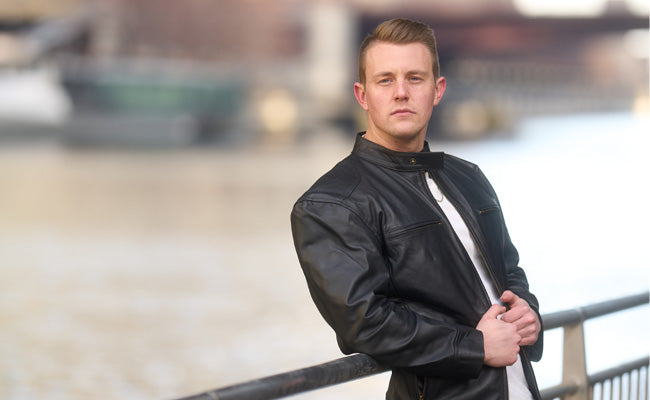
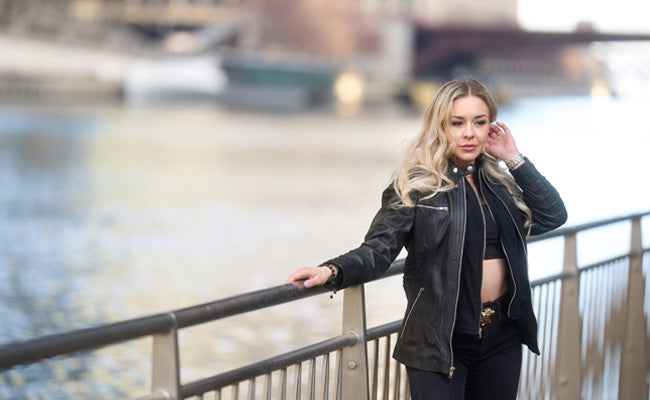
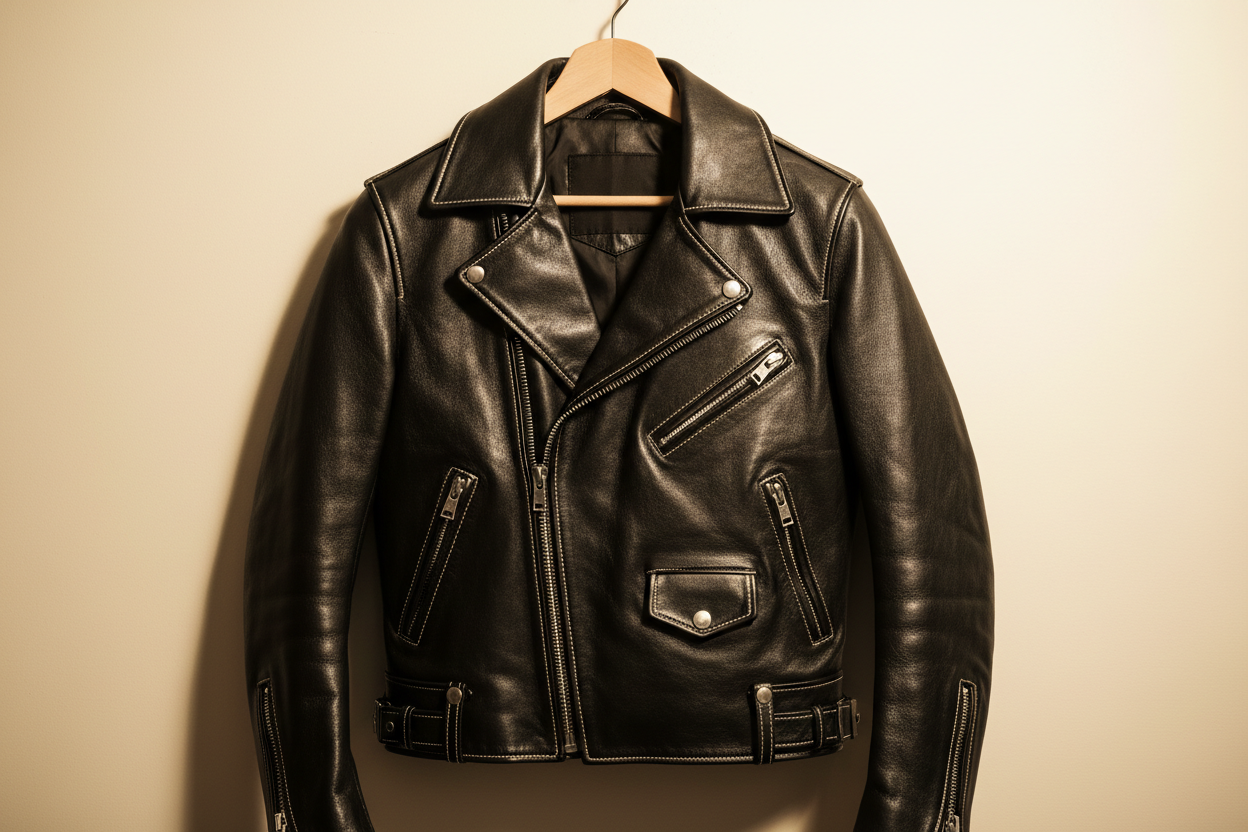
Biker/moto: zip heavy, close cut, often asymmetric and usually made of full grain cowhide.
-
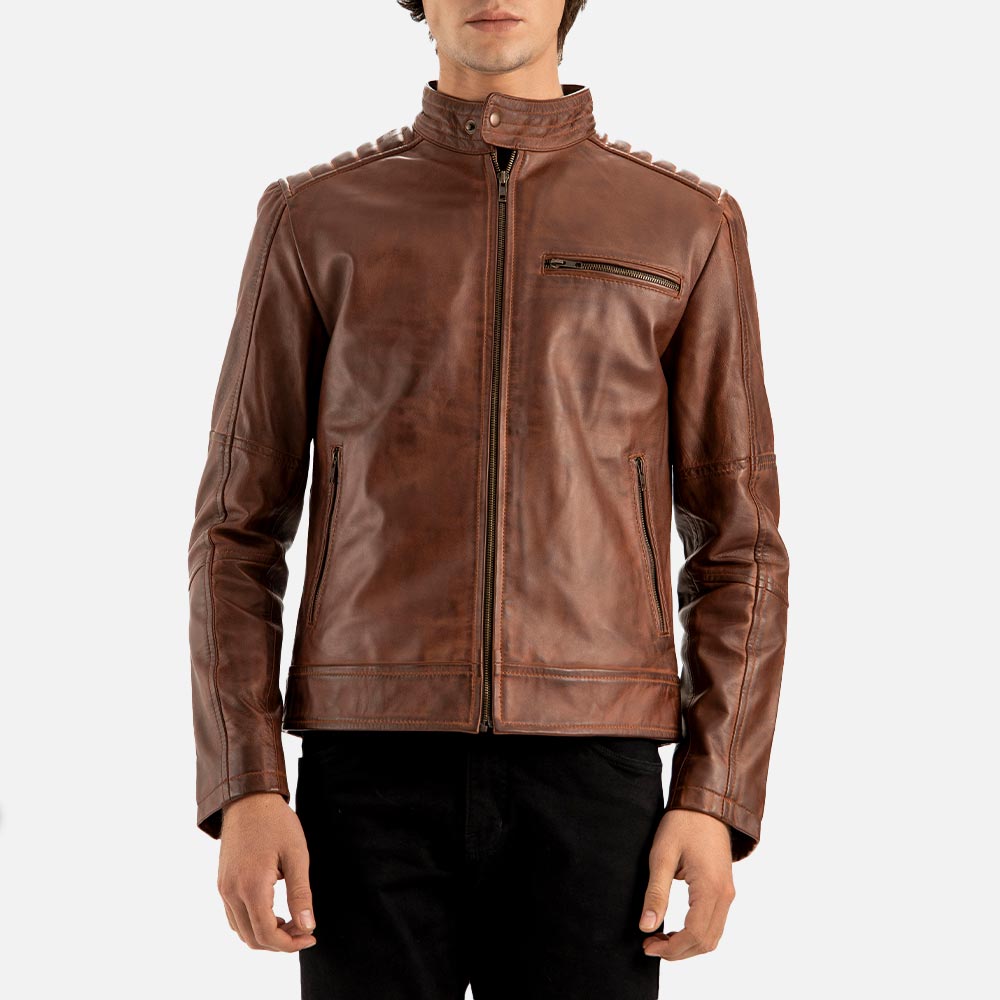
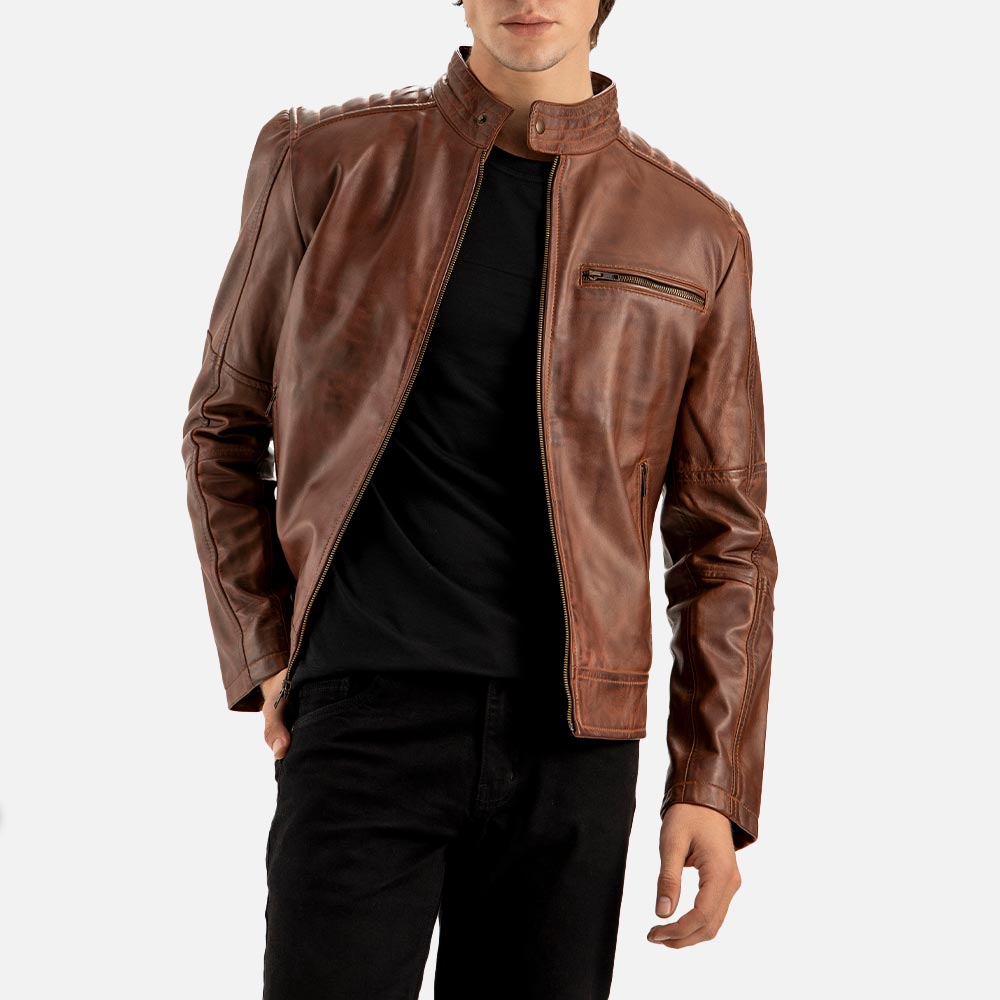
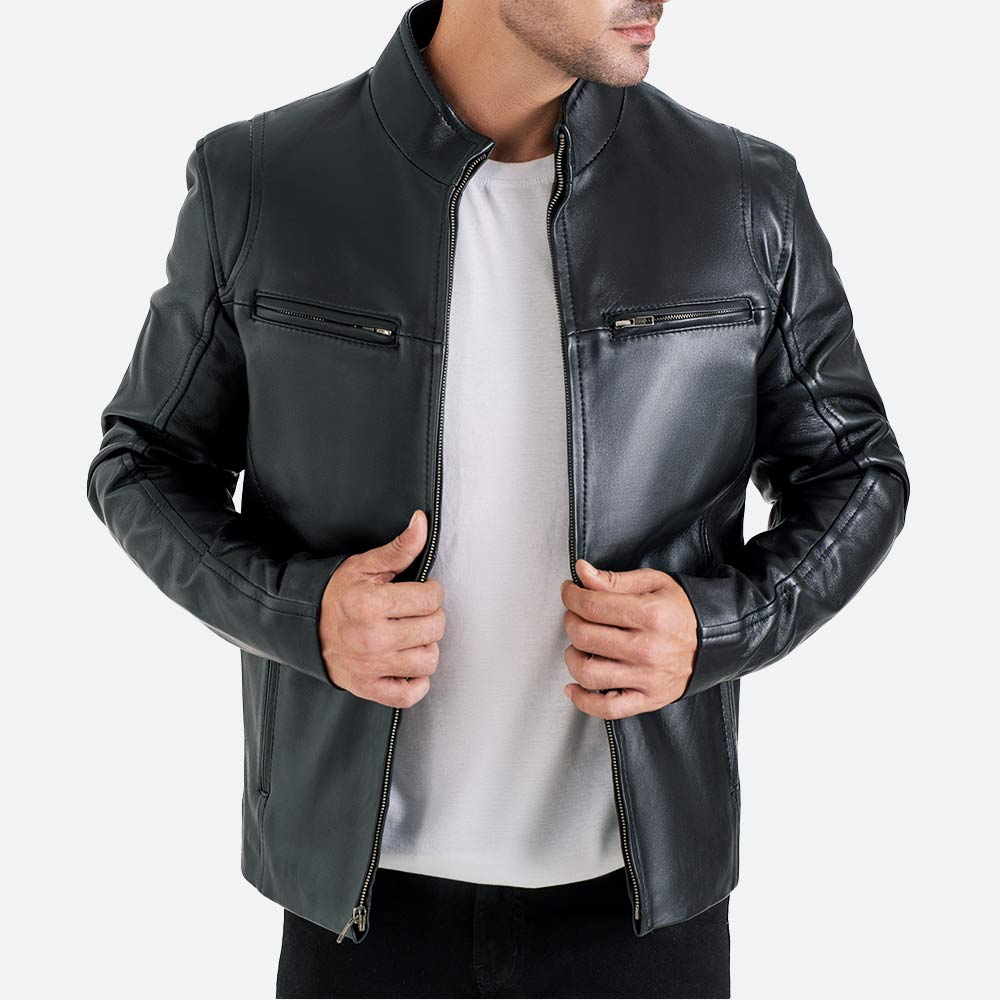
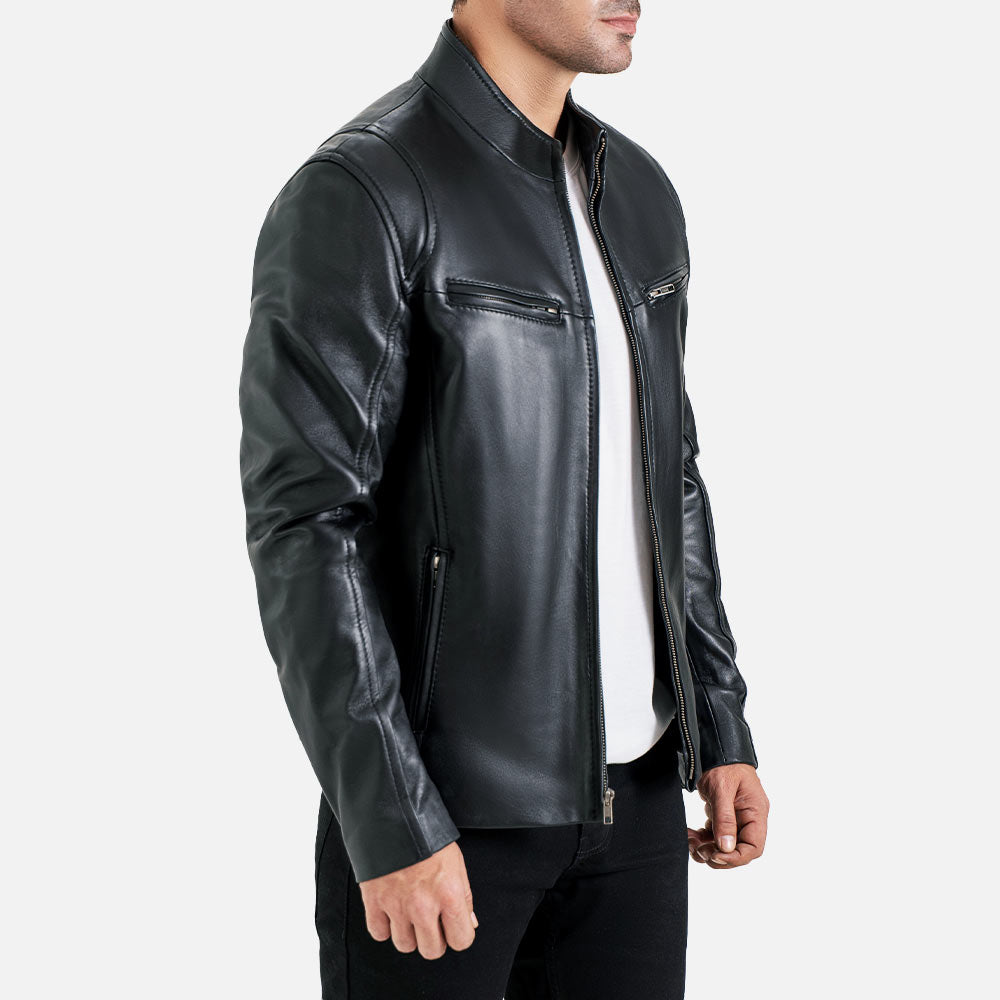
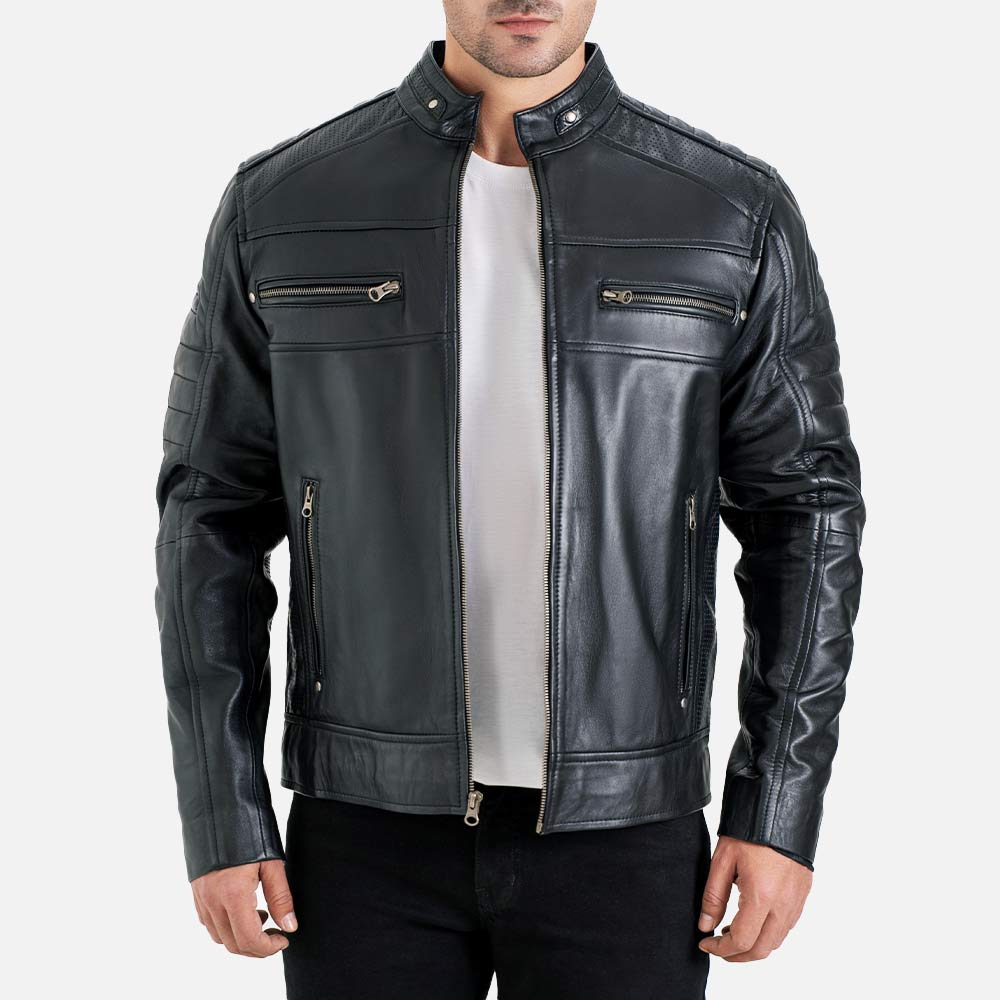
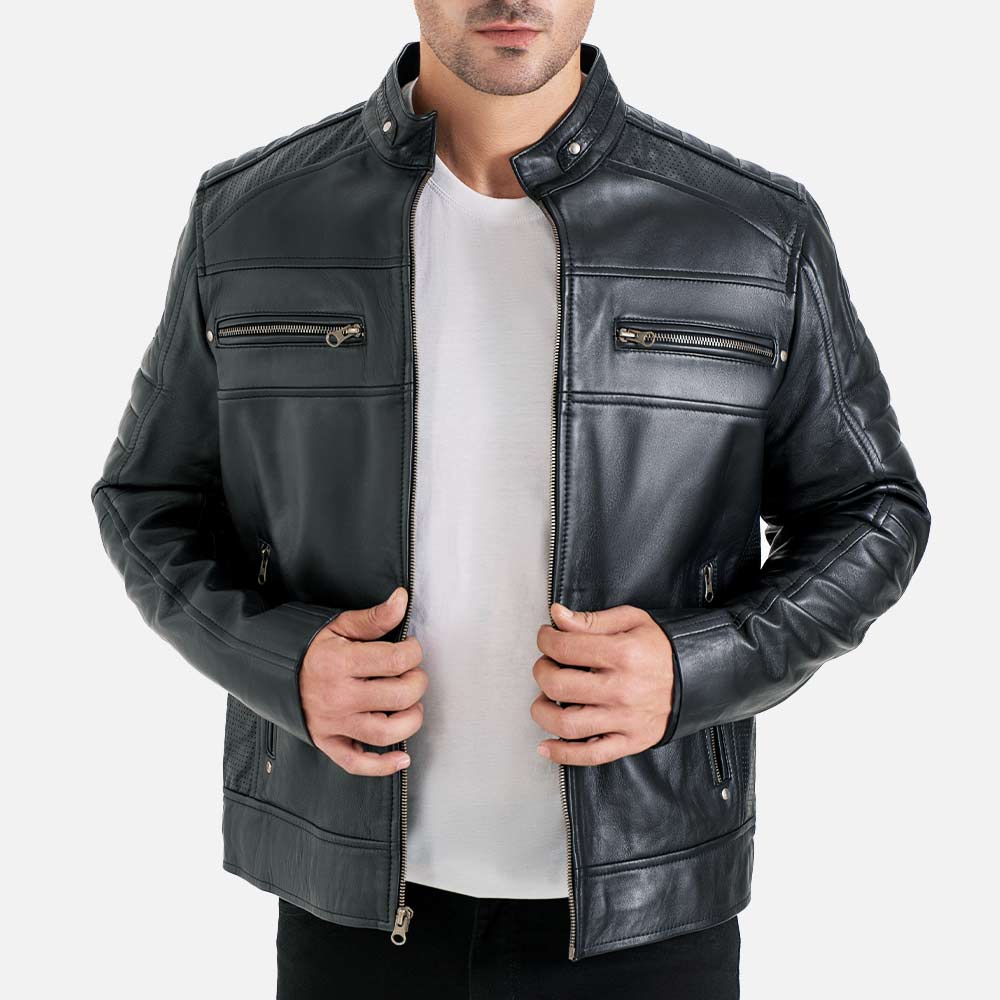
Café racer: stripped back, band collar, minimal hardware making it a clean, smart casual option.
-
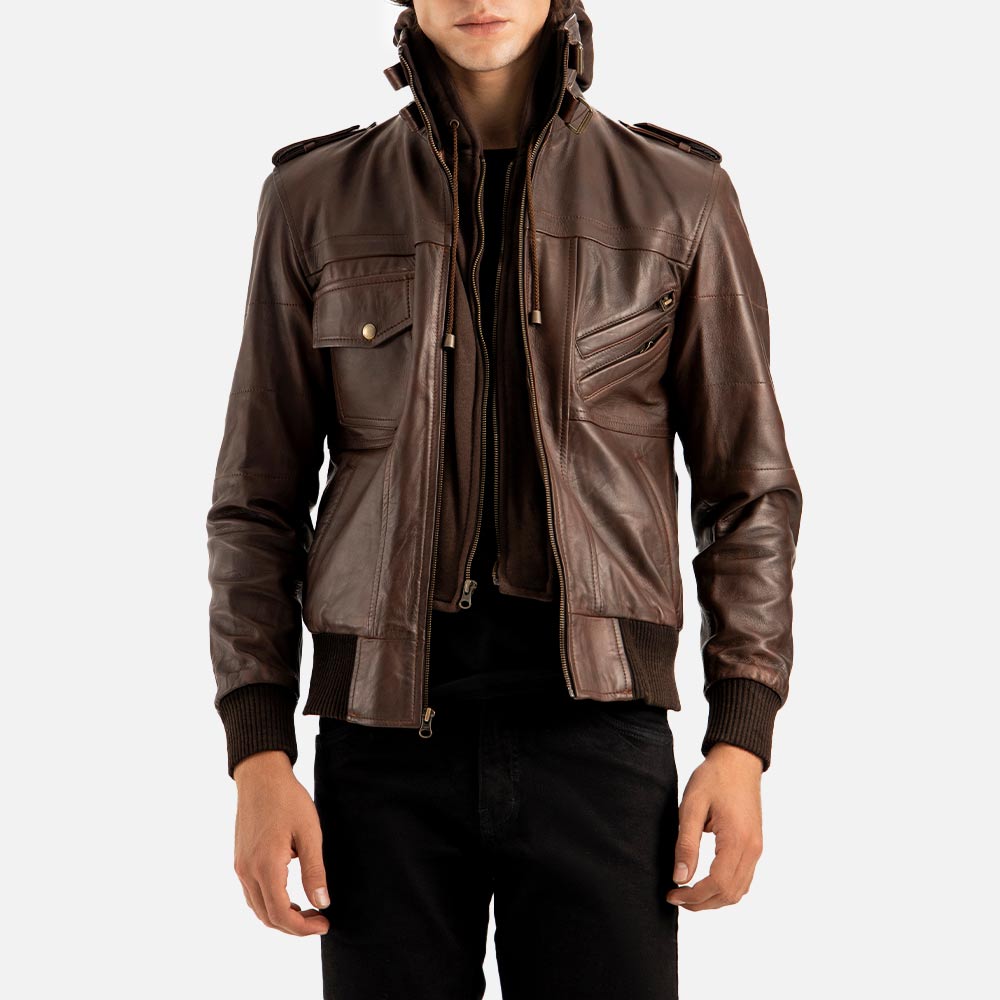
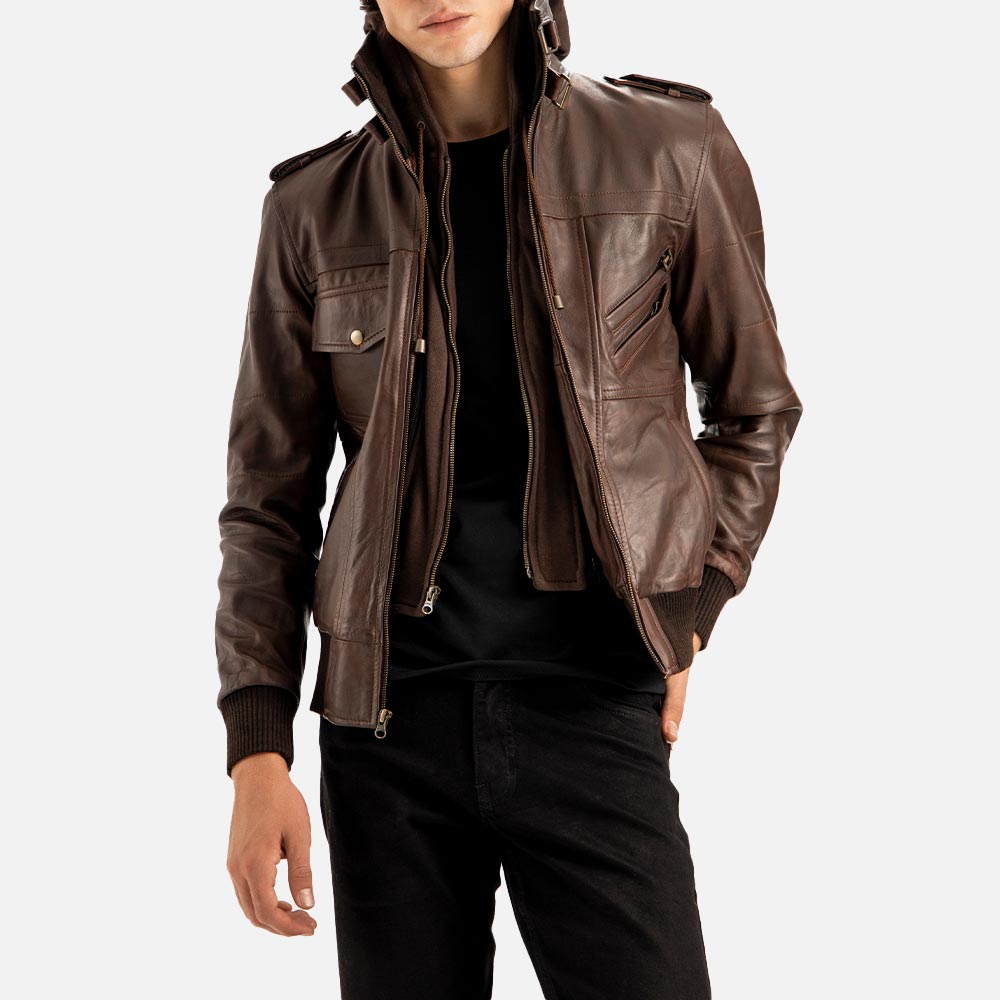
Bomber: ribbed collar, cuffs, and hem, very classic and the easiest to layer.
-
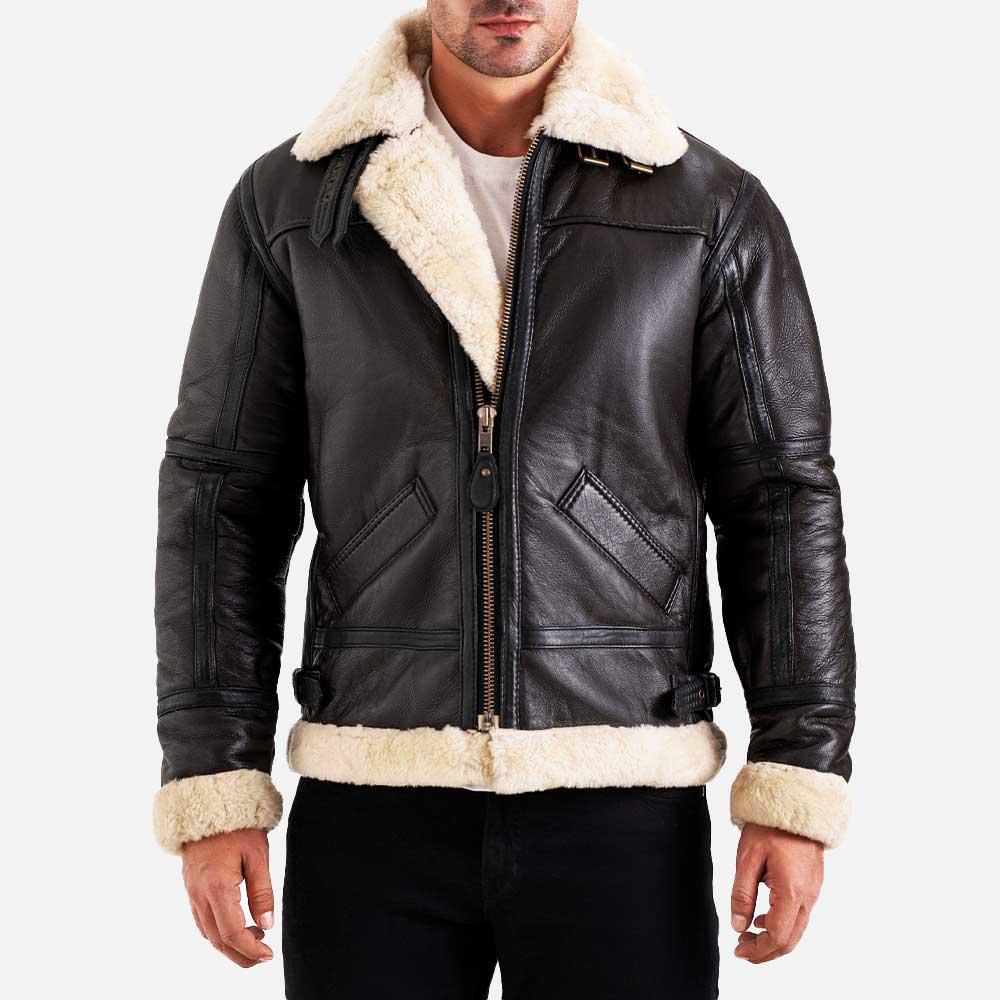
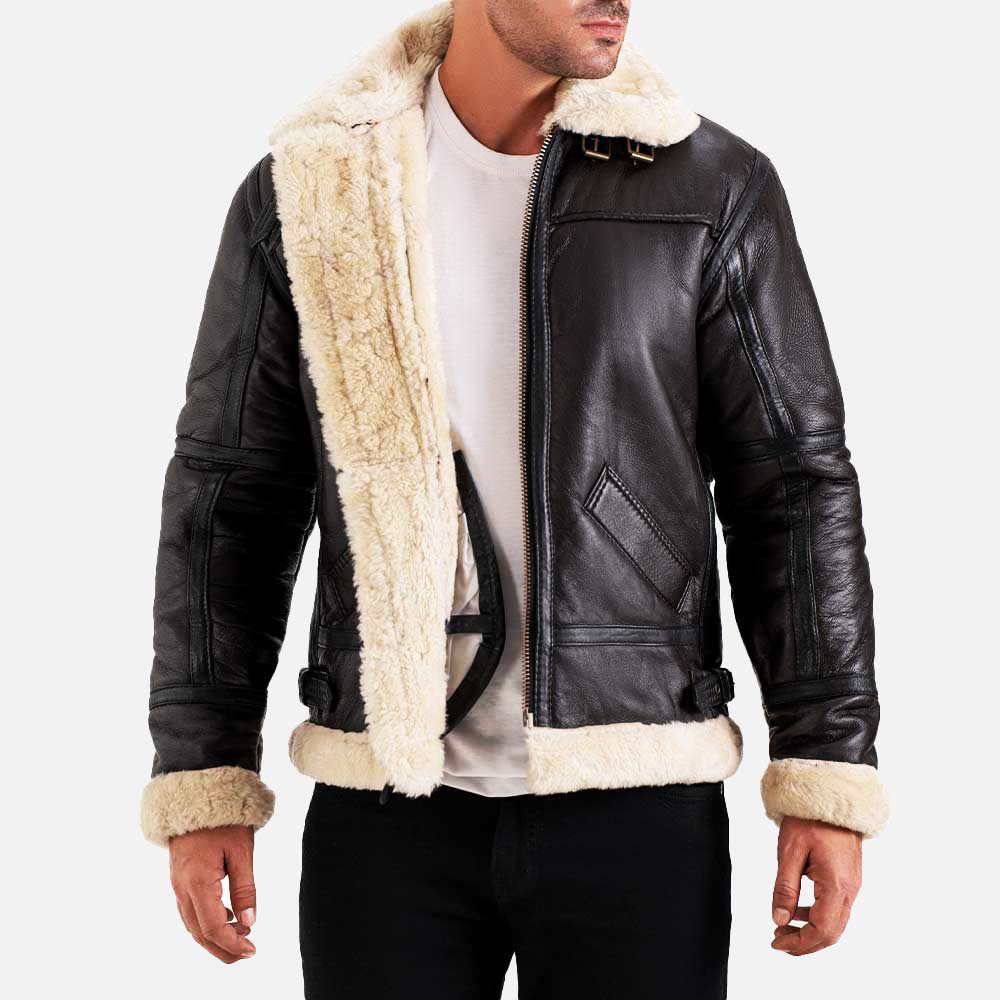
Aviator/shearling: the wool lined B-3 and RAF cuts, built for genuine cold.
-
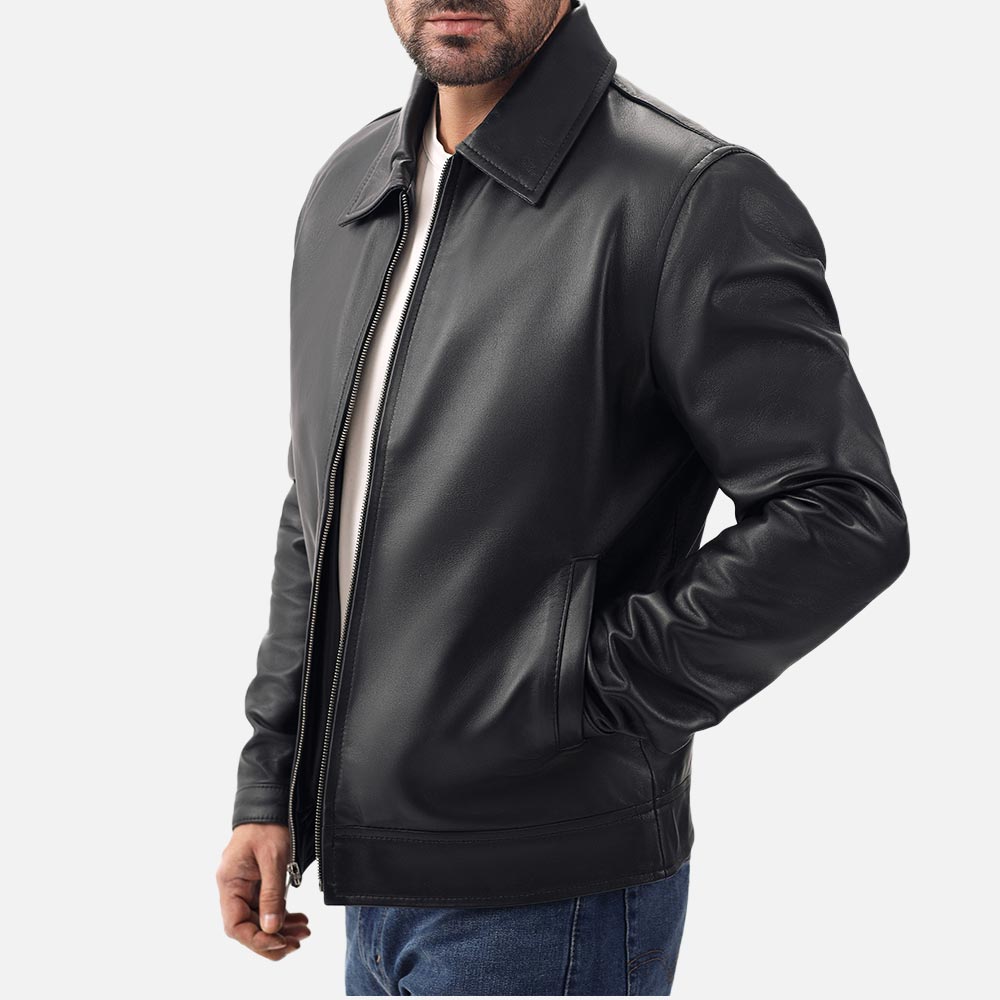
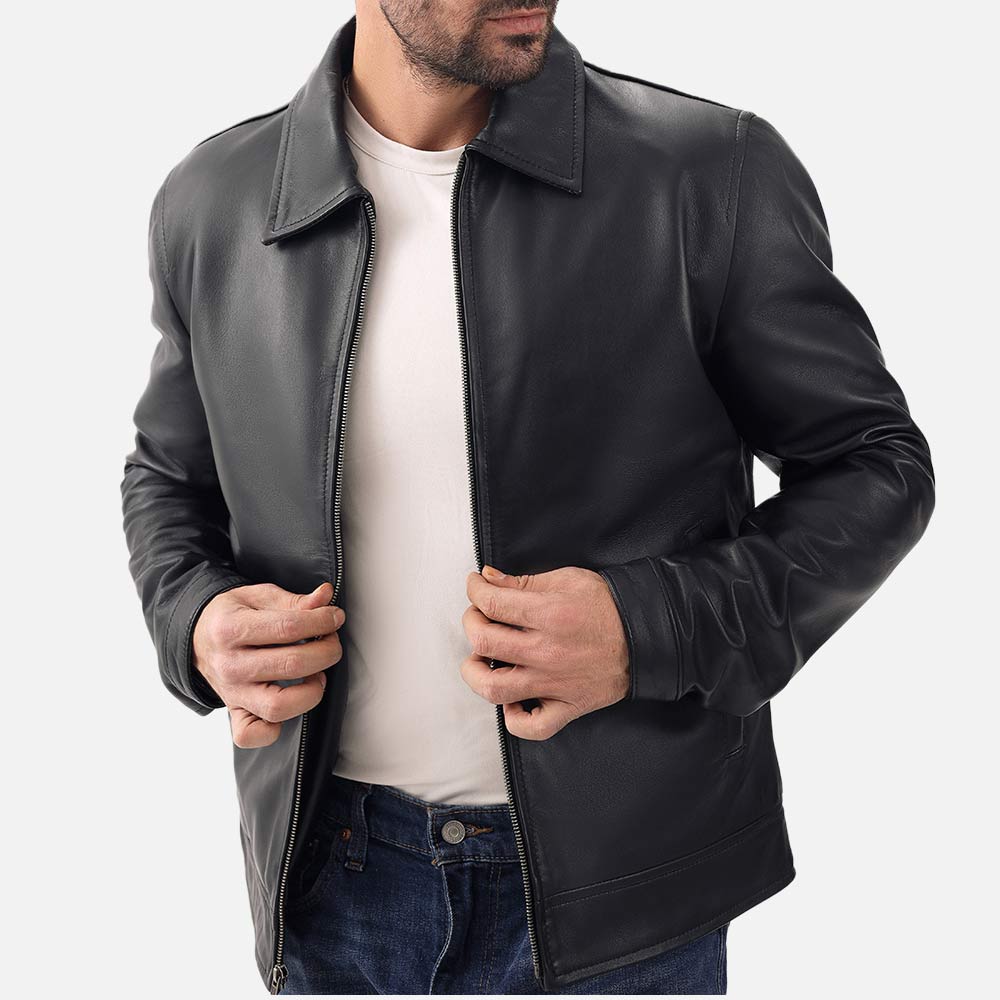
Trucker: the shirt jacket cut rendered in hide, easy to throw over a tee.
-
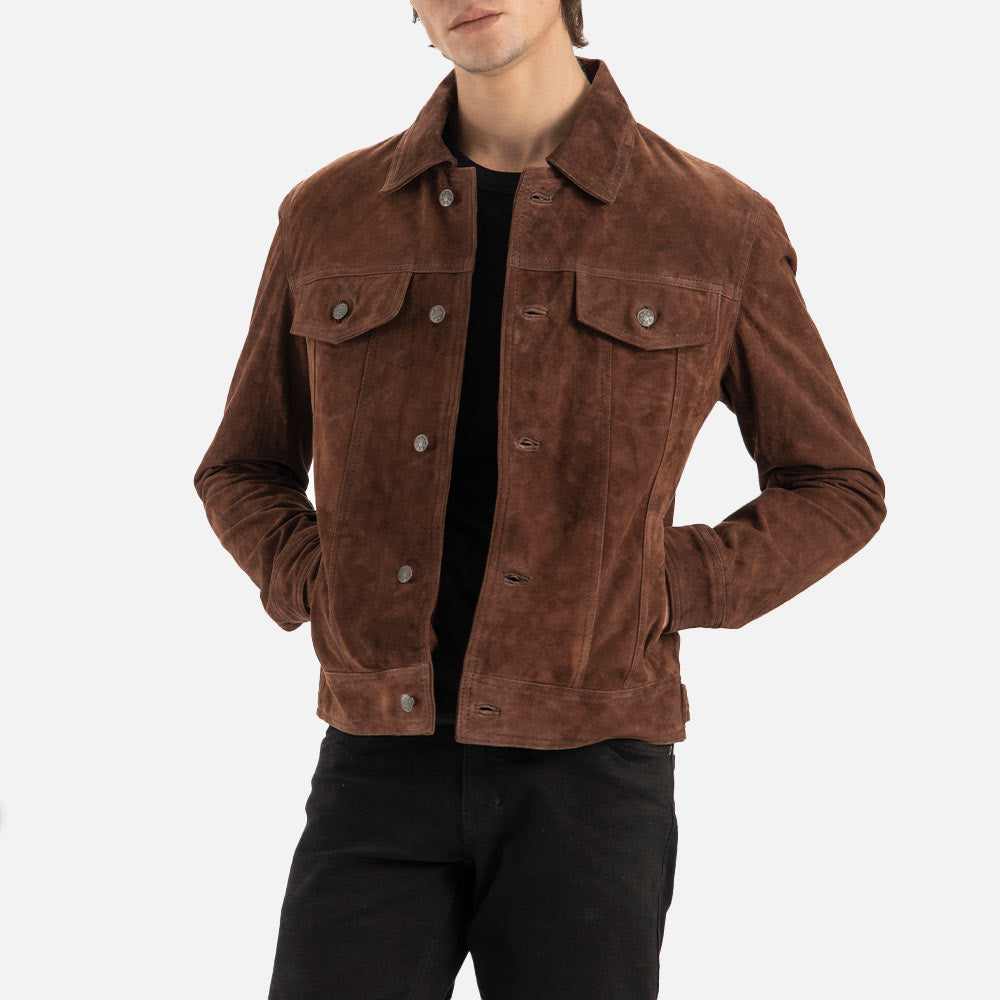
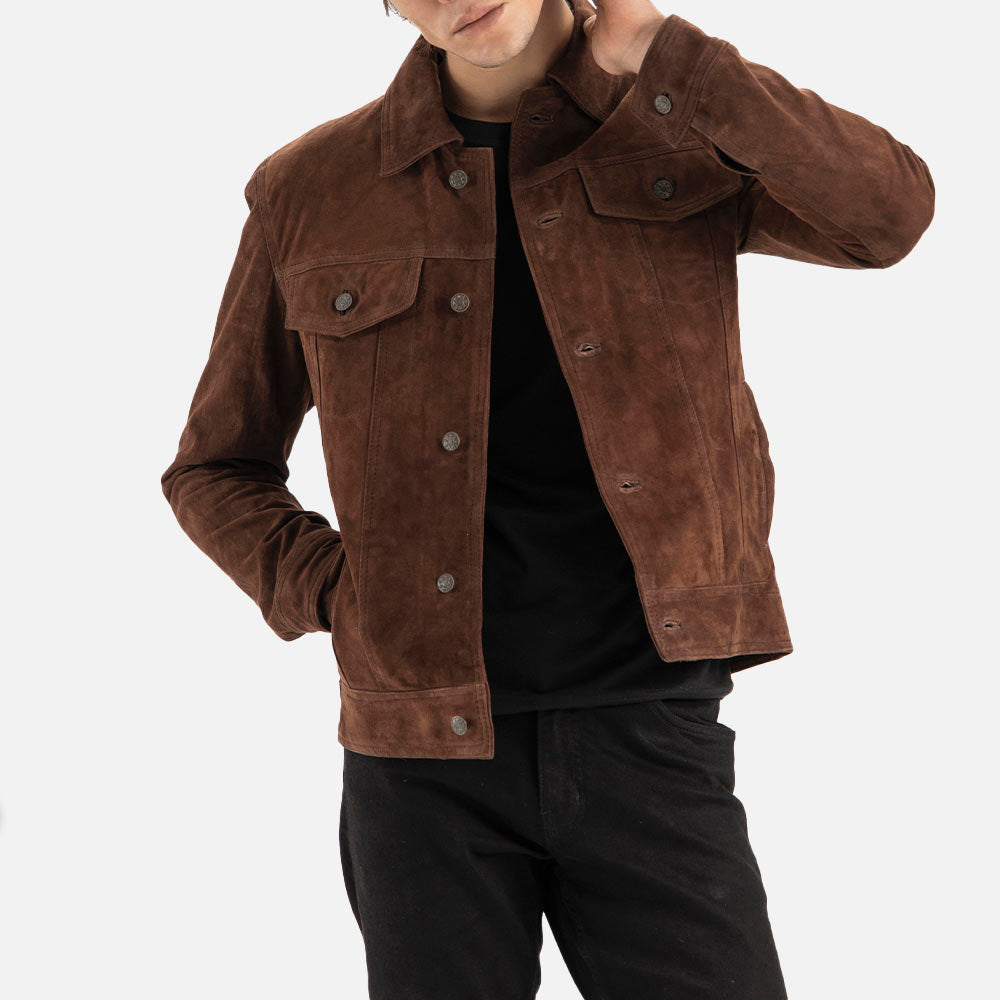
Suede: the sanded underside of the hide, softer, lighter, and dressier.
-
Leather blazers and coats: tailored and longer shapes for smart wear and cold weather coats.
Most people are only familiar with the bomber or biker leather jacket, not knowing the styles or what would suit them best.
That is why our men's leather jacket collection is your ultimate solution.
After picking your style, checking the quality of the leather is the main part.
What Actually Makes a Quality Leather Jacket
3 things separate a quality leather jacket from a fake one:
-
the tanning
-
the grade
-
the construction
Tanning is how raw hide becomes wearable leather.
Grade is how much of the natural hide survives into the finished jacket.
Construction is where the leather is given its shape, like cutting, stitching, cleaning edges, and adding the zippers, buttons, or hooks.
Leather Grades: Lambskin vs Cowhide vs Shearling vs Full-Grain
"Genuine leather" is not one material or type. Here are a few types of leather that are mostly used today.
|
Lambskin |
Cowhide |
Shearling |
Full-Grain |
|
|
Feel |
Soft, lightweight |
Thick, structured |
Soft, wool-lined |
Firm, softens with wear |
|
Warmth |
Light |
Moderate |
Very warm |
Moderate |
|
Durability |
Moderate |
Very high |
High |
Highest |
|
Best for |
A refined, close fit |
Rugged everyday wear |
Genuine cold |
All rounder |
In conclusion, lambskin is soft and refined, ideal for a smart, close fitting jacket. Cowhide is thicker and tougher, which is why it is the biker's favourite. Shearling is sheepskin that has an inner lining of wool; these are used mostly in the winter. Full-grain leather retains the outermost layer of the hide with its natural grain intact, which is why it is the most durable grade.
That durability is the whole reason our men's genuine leather jackets are built on full grain hide: it turns a jacket from a seasonal buy into a decade long one. Want a deeper breakdown?
Read our guide: Leather jacket outfit ideas for different body types →
How to Spot Real Leather in 30 Seconds
Once you know the grades, you need to verify them in the store or the box. Four checks catch almost every fake:
-
Grain: genuine leather shows an irregular, natural grain, and a fake one will have a perfect repeating pattern.
-
Smell: real leather has a soft, earthy scent, while the fake one will have an almost chemical like synthetic smell.
-
Temperature: real leather is generally warm, while faux stays cool and flat because it's plastic.
-
Backing and edges: real leather has a suede-like underside and cleanly cut edges, while bonded leather shows a fabric backing and glued edges that peel over time.
If a jacket is marketed as leather, priced like a T-shirt, and fails these checks, it is almost certainly bonded or PU, and it will eventually wear out early.
How to Choose the Best Leather Jacket for You
You now know the history, the grades, and how to verify the real thing. Choosing the best leather jacket for men comes down to three decisions: hide, fit, and use.
Match the hide to your climate and your life. Cowhide biker for everyday toughness, lambskin café racer for a sharper and lighter look, shearling aviator if you genuinely face the cold.
Then get the fit right, because leather is far less forgiving than cloth. The shoulder seam should sit exactly where your shoulder ends, never past it. You should be able to zip the jacket over a T-shirt or light knit without the front straining, and the sleeves should stop at the wrist bone. Leather relaxes at the elbows and shoulders after a few wears, so a snug fit is correct and a loose one only gets looser.
Get the hide and the fit right, and everything else is tasteful. Curious how a full grain jacket is actually cut and finished?
5 Mistakes That Cost You a Good Leather Jacket
-
Buying the "leather look." Bonded and PU jackets are not budget leather; they're a different, disposable product.
-
Sizing up for layers you'll never wear. A leather jacket should fit over one layer, not a hoodie.
-
Judging the quality by the lining and zips instead of the hide. Hardware is easy to fake; a good hide isn't.
-
Skipping conditioning in the first two years. Untreated leather dries out fastest when it's new.
-
Storing it wrong. A wire hanger will crease and dry a jacket faster than years of wear.
How to Style a Leather Jacket
Since leather does most of the heavy lifting, keep the rest of the outfit simple. Here are 3 combinations that always work:
-
Everyday: black jacket, white tee, dark jeans, clean boots or sneakers.
-
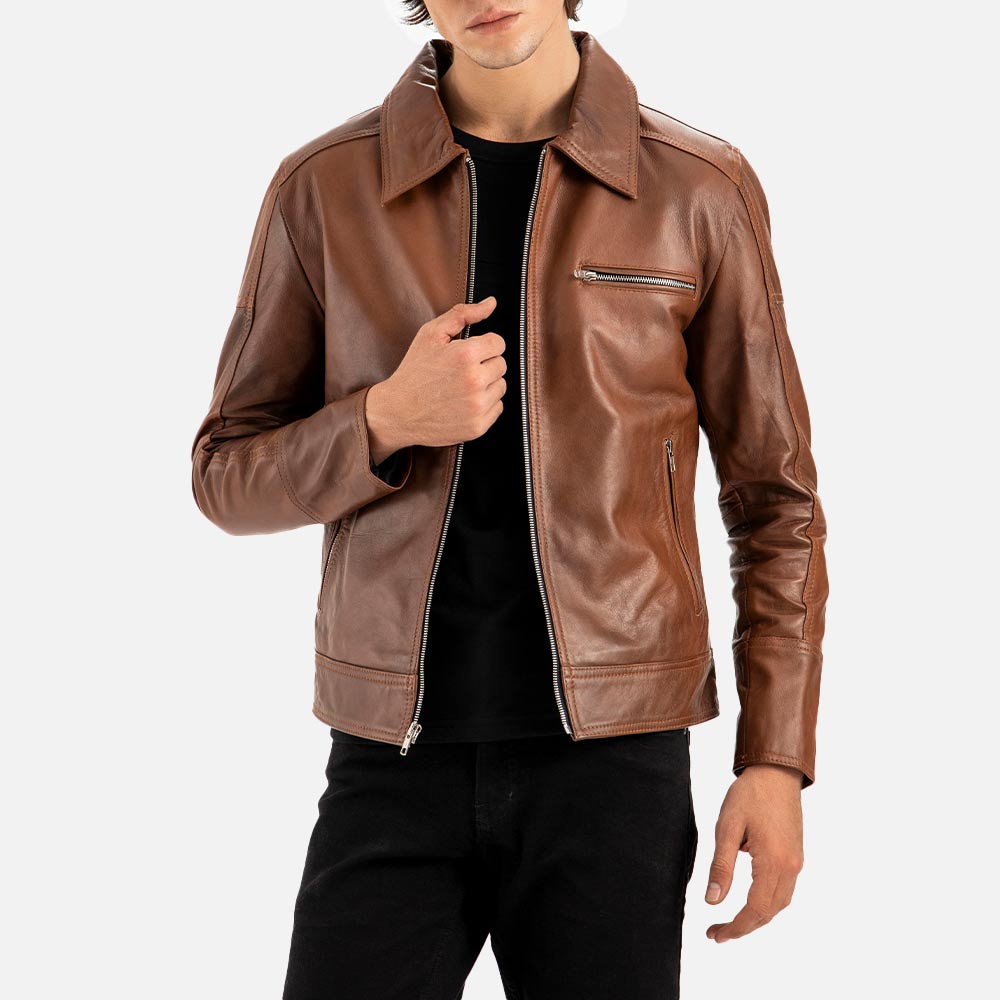
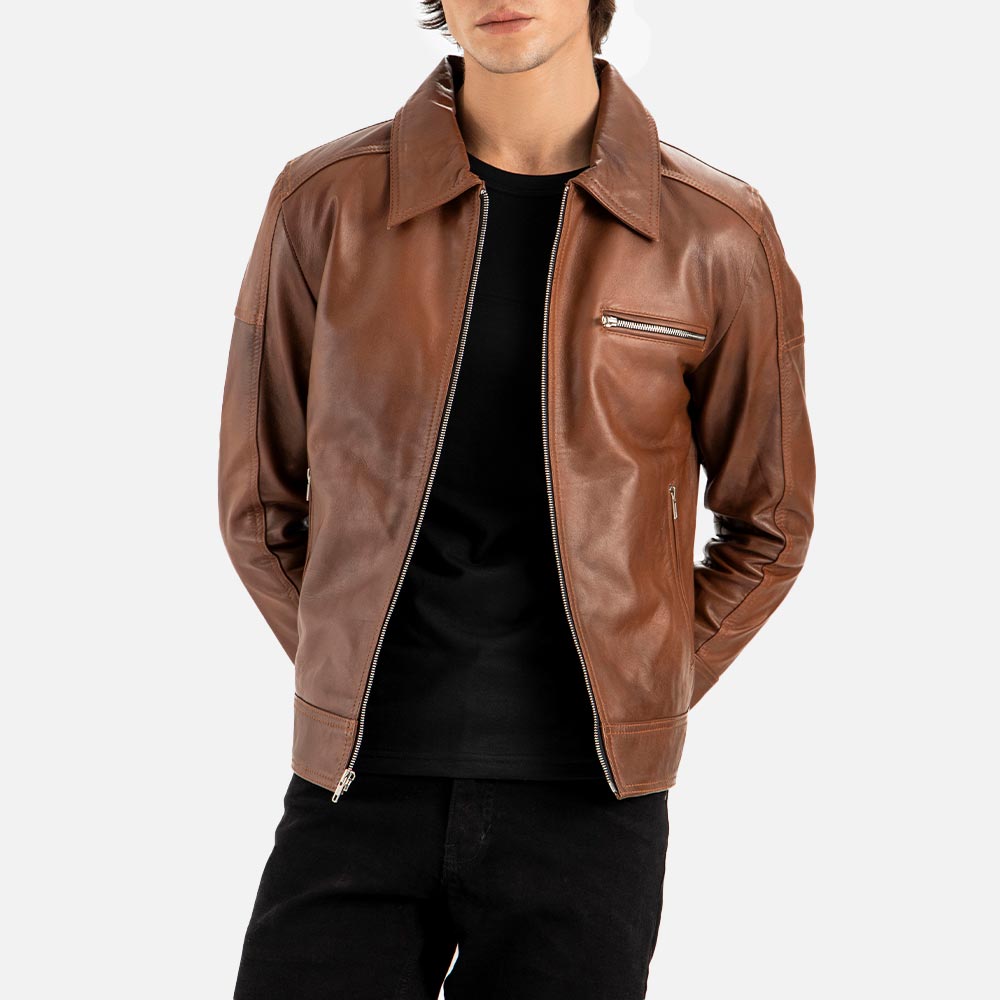
Smart-casual: brown jacket, fine-gauge knit, tailored trousers, leather boots.
-
Layered for cold: shearling aviator over a hoodie or chunky sweater.
Taking Care Of Your Leather Jacket
A well kept leather jacket can last up to 10 years if properly taken care of. Here are some steps that you can take to ensure your jacket doesn't get spoiled too early.
-
Wipe it with a dry or barely damp cloth after wear.
-
Condition it once or twice a year so the fibers don't dry out.
-
Store it on a wide or padded hanger away from direct heat and sunlight.
-
Do not soak it in water.
-
No machine washing or tumble drying.
A Few Marco Enzolani Leather Jackets to Start With
If you're weighing options, three are worth a look:
-
Firenze Black Leather Biker Jacket: the most versatile pick black goes with everything.
-
Trentino B3 Brown Real Shearling Bomber Jacket: the B-3 heritage piece, real sheepskin warmth for genuine cold.
-
Ortisei Brown Suede Bomber Jacket: softer and more casual if full leather feels too heavy.
Prefer a classic, vintage-finished cut? Browse the full vintage leather jacket collection, or catch our current men's leather jackets on sale.


Leave a comment
This site is protected by hCaptcha and the hCaptcha Privacy Policy and Terms of Service apply.