

Quick Answer
A plain bomber jacket is not a Canadian winter jacket. Leather blocks wind almost completely, but hide on its own has very little insulation. What keeps you warm is the lining. A shearling-lined leather bomber is the warmest option, because the wool traps a layer of air against your body. For most of Canada, look for real shearling rather than faux fur, a collar that closes at the neck, and enough room to layer underneath.
Plenty of bomber jackets are sold as winter jackets. Most of them are not.
They look right in the photo. They block wind. Then you stand at a bus stop in Winnipeg in January and discover the lining is a thin sheet of polyester.
That gap between looking warm and being warm is what this guide covers. Here is what Canadian winters actually involve, what a leather bomber does and does not do about it, and which men's bomber jackets Canada shoppers should be looking at.
What a Canadian Winter Actually Involves
The numbers explain why an unlined bomber fails.
|
City |
January average high |
January average low |
|
Toronto |
-2°C (28°F) |
-7°C (19°F) |
|
Winnipeg |
-11°C (12°F) |
-18.5°C (-1°F) |
Toronto has recorded overnight lows of -21°C with a wind chill of -30°C, and Environment Canada issues extreme cold warnings for the city most winters.
Across much of the country, January wind chill reaches -40°C on the prairies and in the north.
Toronto also gets roughly 100 to 150 cm of snow a season, and January humidity near 83%. Damp cold cuts through clothing faster than dry cold at the same temperature.
So a Canadian winter is four problems at once:
-
Wind
-
deep cold
-
Damp
-
snow
The best bomber jackets for freezing weather handle all four, not just the temperature, and that is what separates real bomber leather jackets from the ones that only look the part.
Why a Bomber Works Here, and Where It Falls Short
A bomber is cropped at the waist with knitted ribbing at the cuffs and hem. That ribbing does real work in cold weather, because it seals the two openings where warm air escapes first.
Leather is also one of the best windproof materials you can wear. Wind is what strips warm air off your body and turns -10°C into something that feels closer to -25°C.
What leather does not do is insulate. Hide is a barrier, not a blanket. An unlined leather bomber is comfortable to around 7°C, and below that you are relying entirely on the lining and what you wear underneath.
The bomber's one weakness in Canada is length. It stops at your waist, so it leaves your lower back exposed when you sit or bend. In deep cold, a leather coat covers more of you.
Which Lining Actually Keeps You Warm
Linings vary far more than the product photos suggest.
|
Lining |
How warm |
Notes |
|
Real shearling |
Warmest |
Wool traps air against the body, handles moisture, does not flatten |
|
Quilted with fill |
Warm |
Fine for mild winters, compresses over time |
|
Faux fur or sherpa |
Moderate |
Looks like shearling in photos, insulates far less |
|
Polyester lining |
Minimal |
A fall jacket, not a winter one |
|
Unlined |
None |
Windproof only |
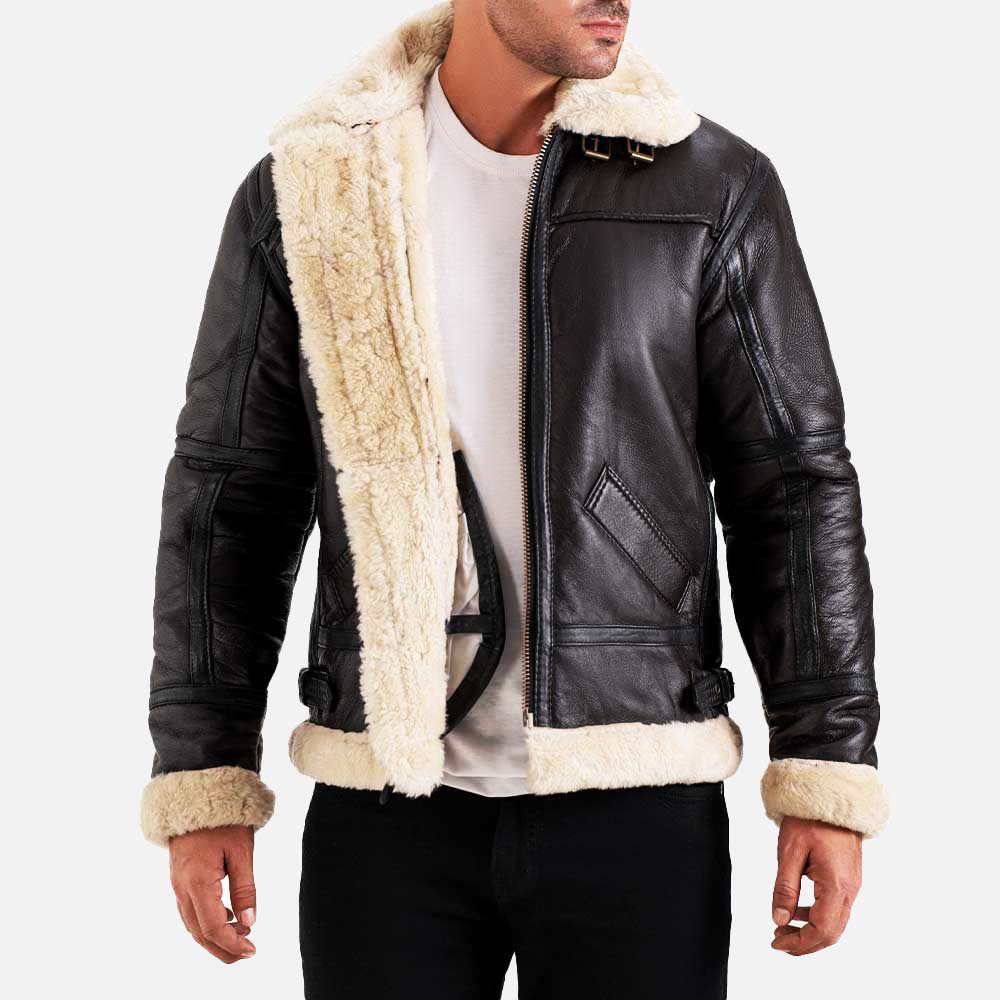
Real shearling is warmest because the wool is still attached to the hide. Those fibers hold air in thousands of small pockets, and air is what insulates you. Shearling also handles moisture better than synthetic fill, which matters in damp Canadian cold.
Flight crews wore sheepskin at altitude before heated cockpits existed. The same construction still works at a bus stop.
Which Leather Is Best for a Winter Bomber?
The hide matters as much as the lining.
-
Cowhide. Heaviest and toughest. Blocks wind best and shrugs off snow and slush. The right choice for genuinely cold regions.
-
Sheepskin and shearling. Hide outside, wool inside, in one piece. Warmest overall.
-
Goatskin. Lighter, with a pebbled surface that hides scuffs. A reasonable middle option for milder coastal winters.
-
Lambskin. Soft and light, and the wrong choice for winter. This is a spring and fall leather.
-
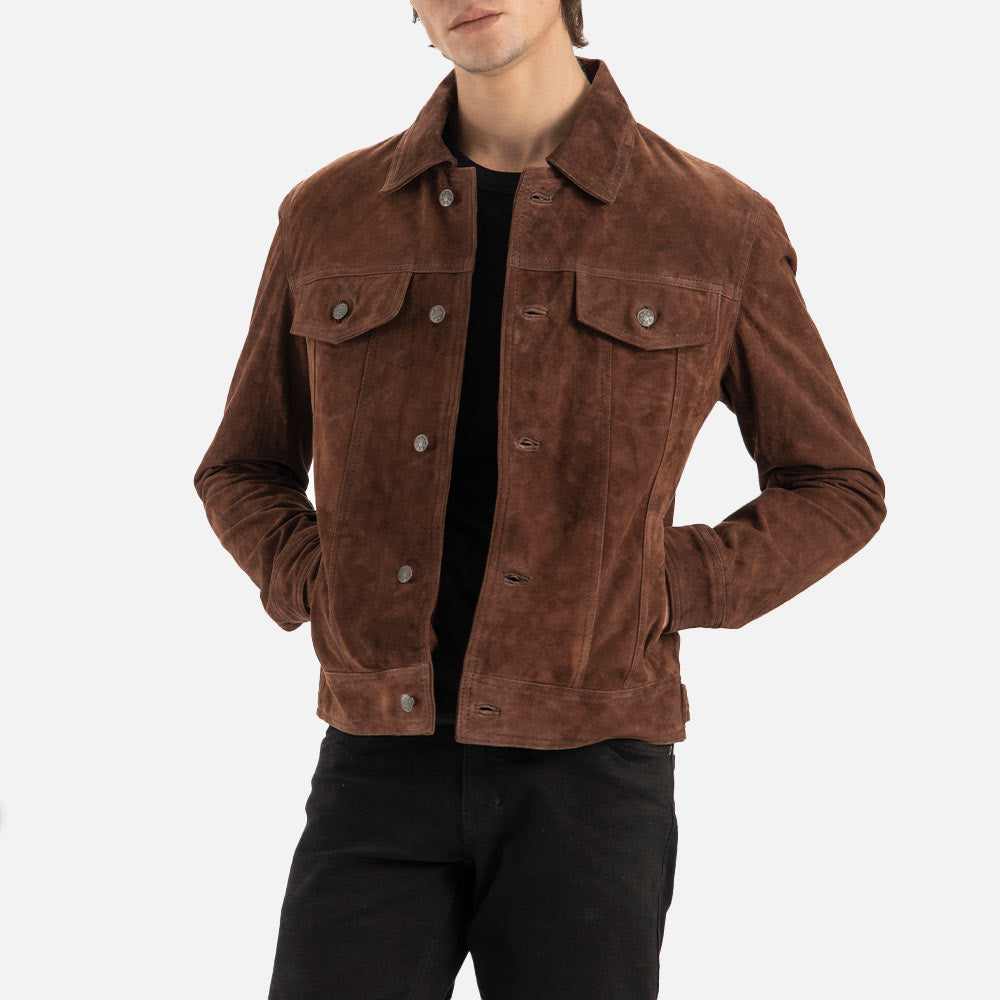
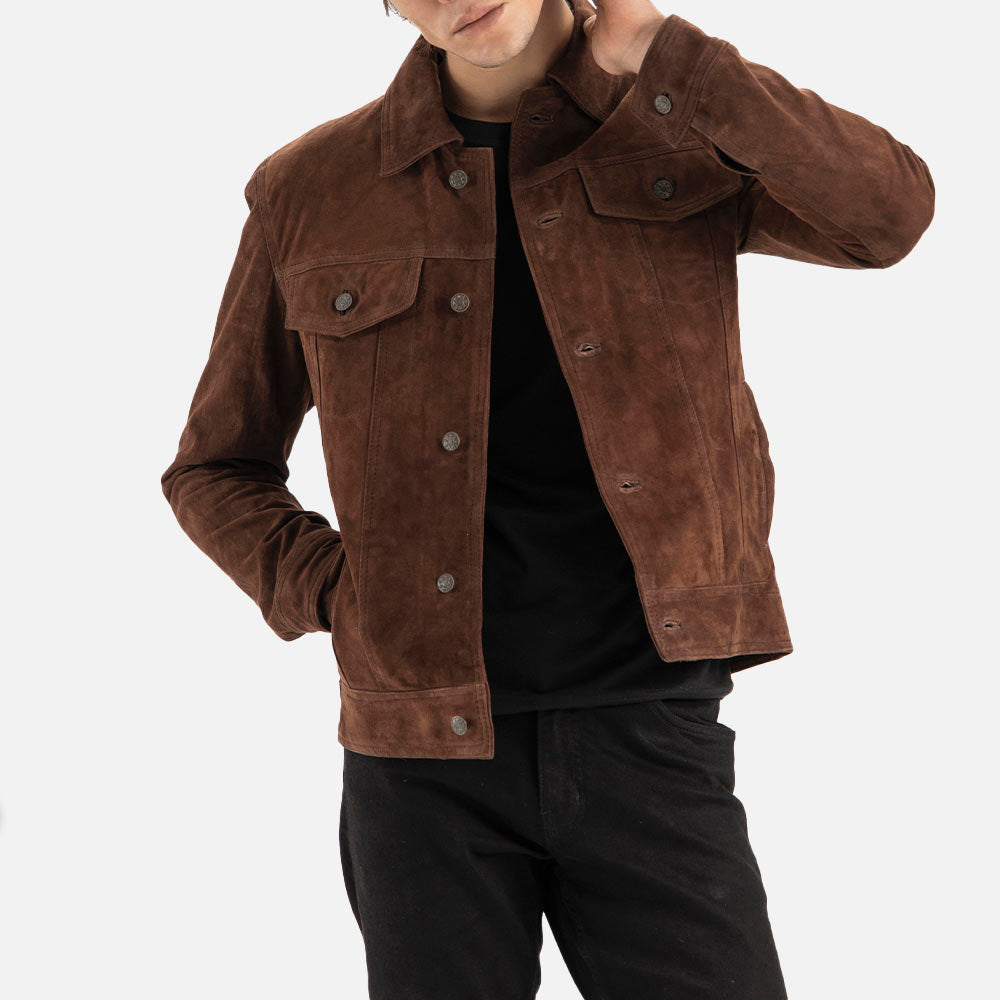
Suede. Avoid it in snow entirely. It absorbs water and stains permanently.
If you want men's bomber jackets for snow specifically, cowhide and sheepskin are the only two hides worth considering.
That last point answers a question we get often. Between lambskin and a shearling-lined bomber, the shearling wins in winter every time, and it is not close.
The Best Leather Bomber Jackets for Canadian Winter
These are the best winter bomber jackets Canada shoppers can buy from our collection. All are genuine leather bomber jackets built for real cold rather than jackets that only look warm.
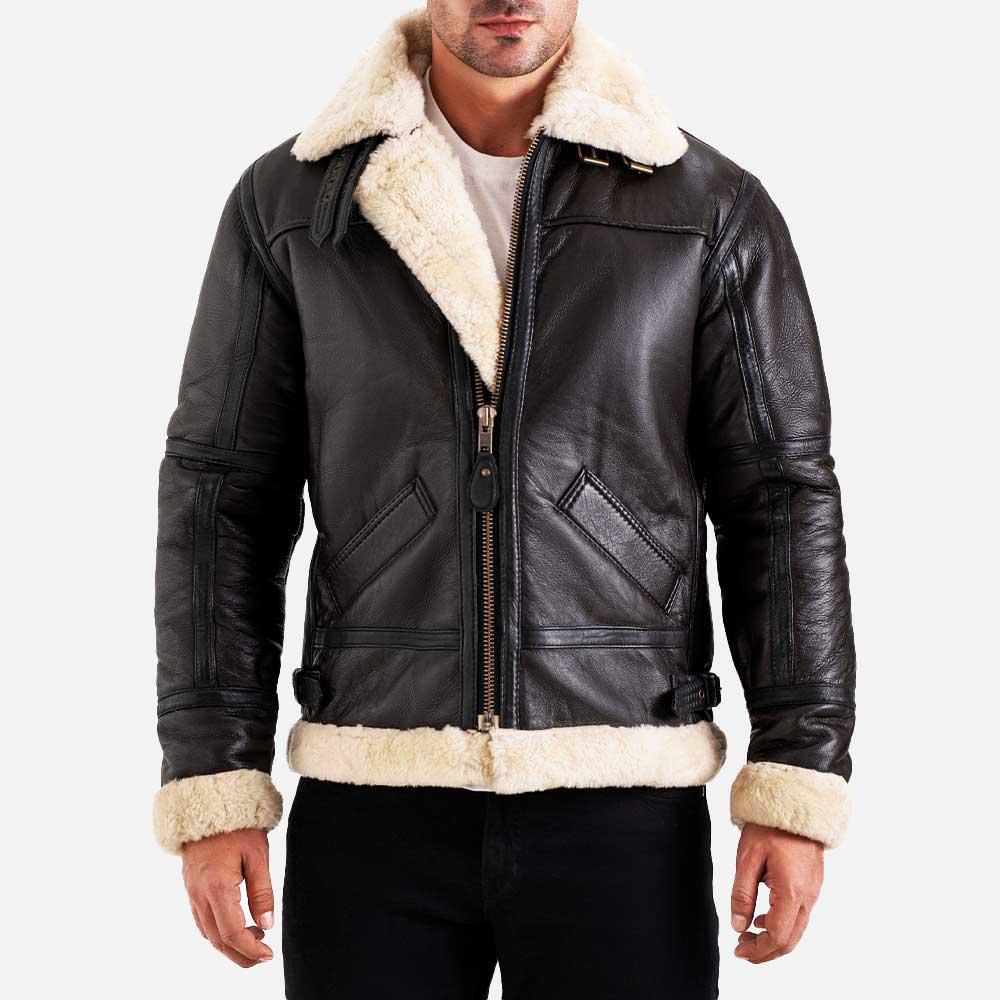
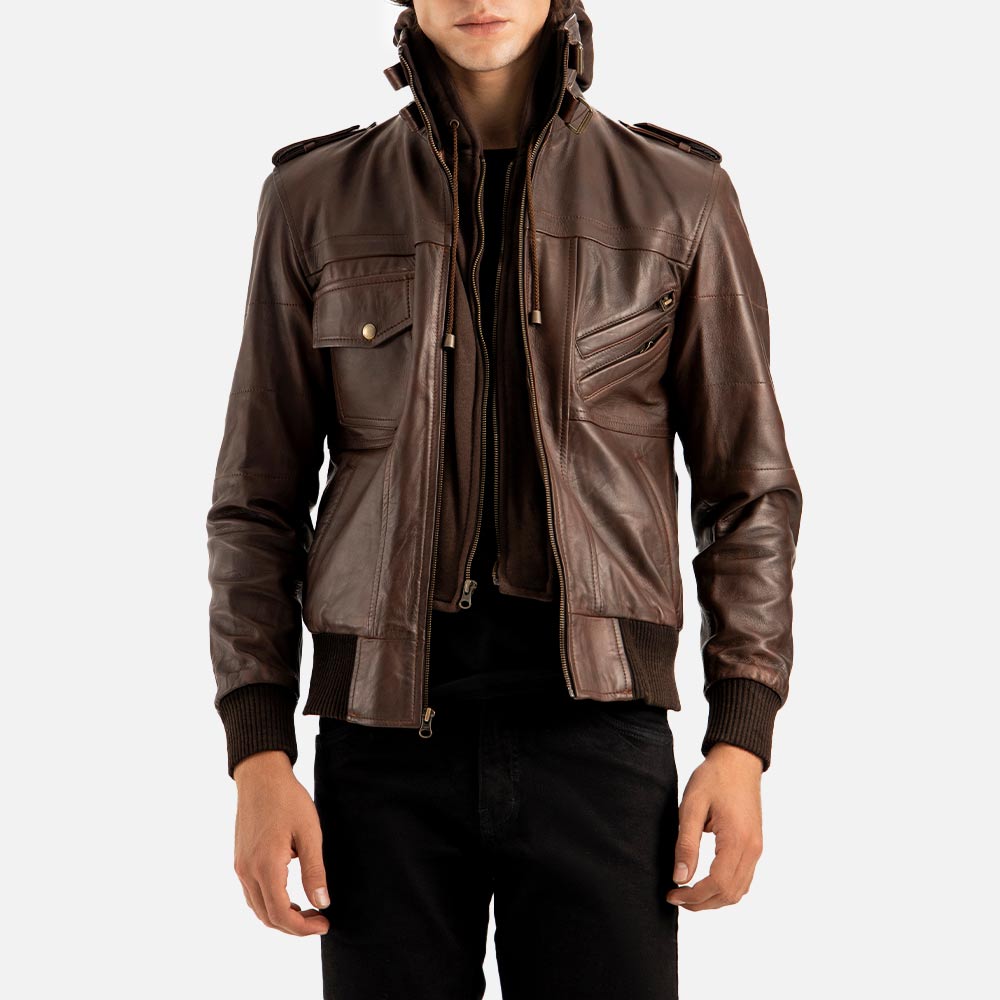
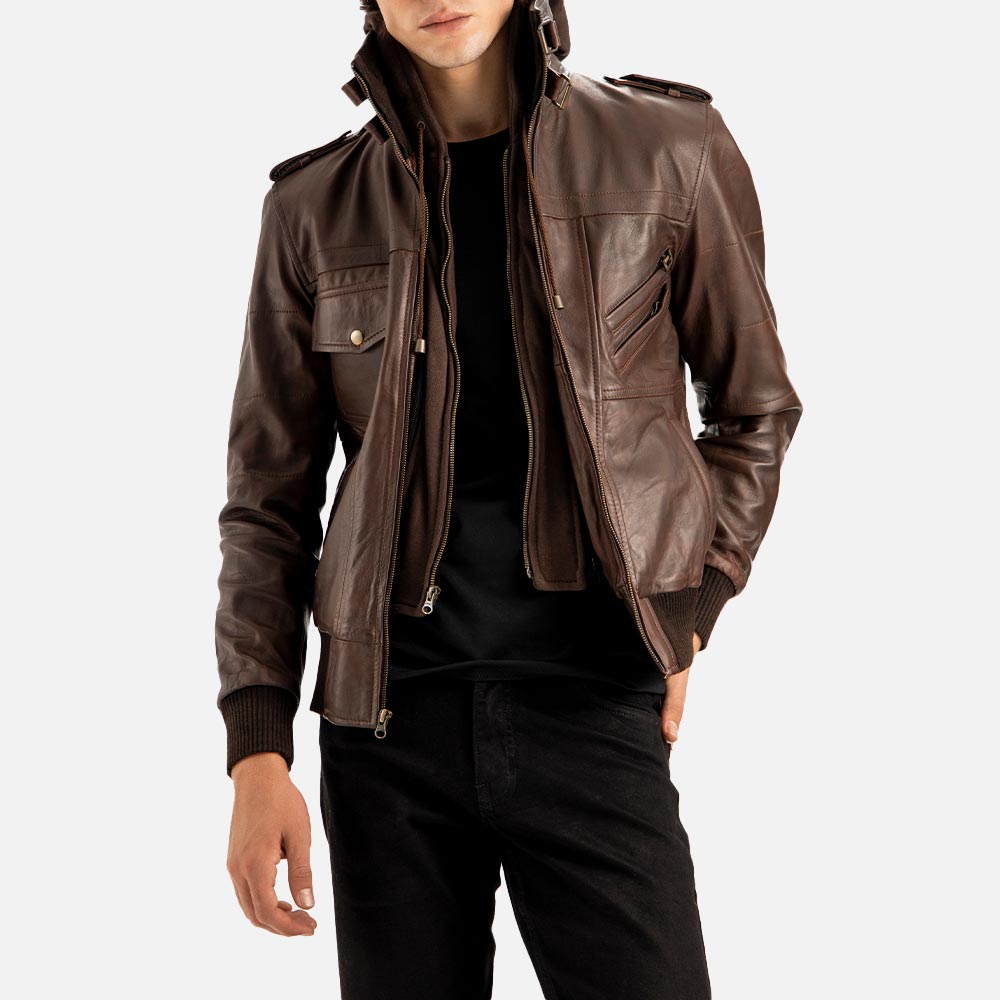
Trentino B-3 Brown Shearling Bomber — $269.99. Built on the wartime B-3 pattern, designed for bomber crews flying at altitude. Real shearling throughout, with a collar that turns up and closes at the neck. If your winters hit -20°C, this is the one.

Merano Black Real Shearling Bomber. Cropped, black, real shearling inside. Warm enough for Toronto or Vancouver and easier to wear daily than a full B-3.

Alpha RAF Black Shearling Bomber. A flight-jacket shape with a shearling collar. Good for cold commutes when you want a jacket with more presence.

Browse the full range of winter bomber jackets for men, all men's bomber jackets, or our aviator and shearling styles. For hood coverage in wet snow, see our hooded leather jackets.
Every one of these is a genuine bomber winter jacket rather than a fall weight sold as one. Our jackets run from $169.99 to $269.99, with free worldwide shipping to Canada and 30-day returns. Every product page carries a size guide with full garment measurements, so you can check the fit allows for layers before you order.
What to Wear Under a Bomber Jacket in Winter
Layering is what turns a good jacket into a warm one. Three layers, in this order.
-
Base layer. Merino wool against the skin. It insulates even when damp, which synthetics do not. Avoid cotton, which holds sweat and then chills you.
-
Mid layer. A fine knit or a merino roll-neck. A roll-neck is the single best thing to wear under a bomber, because it seals the neck opening the collar leaves open.
-
Outer layer. The jacket, bought with room for the two layers above.
Skip the heavy hoodie. Leather does not stretch to accommodate bulk, and a thick hood bunches at the collar. Our bomber jacket styling guide covers layering in more detail.
Caring for a Leather Bomber Through a Canadian Winter
Salt and slush do more damage than cold does.
-
Wipe road salt off the same day. Dried salt draws moisture out of the hide and leaves white marks that are hard to remove later.
-
Use water and white vinegar on salt marks. Equal parts, on a damp cloth, testing a hidden area first.
-
Dry a soaked jacket slowly. Hang it at room temperature. Never use a radiator or hairdryer, because heat cracks leather permanently.
-
Keep the ribbing dry. Knit trim holds moisture longer than hide and stretches when it is wet.
-
Condition before winter and again in spring. Cold, dry air pulls moisture out of leather faster than mild weather.
Our bomber jacket care guide and leather cleaning guide cover the full routine.
Related Buying Guide
Why Marco Enzolani for a Canadian Winter
We make what we sell, and we use real shearling rather than faux fur. That is the difference between a jacket that looks warm and one that works at -20°C, and it is what separates premium bomber jackets from fashion pieces.
Every jacket is cut from genuine hide and hand-sewn by our artisans. These are classic bomber jackets in the original flight patterns, so they will not date. We ship free to Canada with 30 days to return anything that does not fit, and we have served more than 1,000 customers worldwide over ten years of making jackets.
Shop warm genuine bomber jackets from $169.99, free shipping to Canada.


Leave a comment
This site is protected by hCaptcha and the hCaptcha Privacy Policy and Terms of Service apply.